

Blog
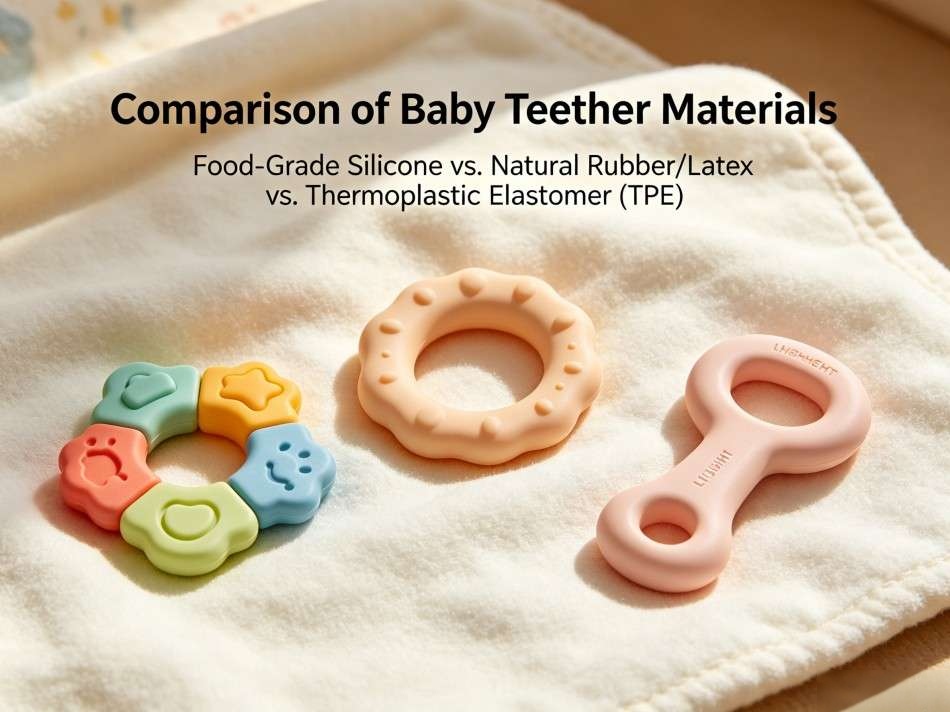
Teething is a phase that most parents look forward to excitedly. It is a milestone that shows your baby is growing up. However, this phase comes with its own challenges. Babies start chewing and biting everything they get their hands on.
To cope with this frustration and to lower baby’s own irritation during teething, parents usually provide them with a teether. This little tool can relieve the itching of the tiny gums and make teething less problematic for both parents and the baby.
However, this seemingly harmless tool can have hidden risks for babies’ health if not selected carefully. While providing a teether to the baby, parents need to keep in mind the design and safety factors, i.e., the teether should be safe and well-designed to protect and soothe the developing gums.
As there are many materials of teether available in the market, this article draws a comparison between three major materials: food-grade silicone, natural rubber/latex, and thermoplastic elastomer (TPE), their safety certifications, and highlights some common misconceptions to help parents make a better choice.
Baby Teether Material Comparison Table
Material | Pros | Cons | Best Use cases |
Food-Grade Silicone | Resistant to heat, toxin-free, odorless, safe for dishwashers, does not change its shape, excessive design range. | Slightly on the heavier side; can grab dust. | Every teething stage; high-temperature |
Natural Rubber / Latex | Soft, flexible, biodegradable; natural, tactile feel | May cause latex allergy; strong rubber smell initially; low heat resistance | Early teething, babies prefering softer bite |
TPE (Thermoplastic Elastomer) | Lighter in weight, elastic, low odor; can be recycled | Lower resistance to temperature; can harden over time; quality varies across manufacturers | Budget friendly, sensory- rich texture toys |
Current Popular Combination Products on the Market
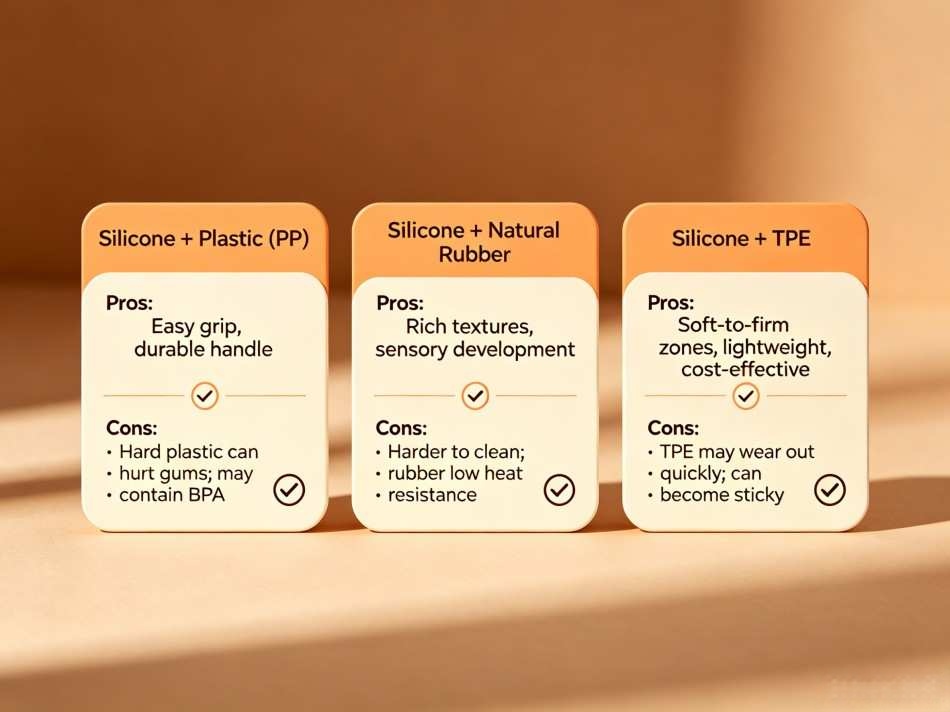
Many popular teethers are made using two or more materials, often including silicon. These hybrid designs enhance sensory stimulation, improve grip, and add functional features such as rattling components.
Popular Combinations & Their Pros/Cons
Silicone + Plastic (PP) Teethers
Advantages:
Have durable plastic handles containing soft silicone chewing areas.
They are easy to grip
Disadvantages:
Hard plastic cannot be chewed and can cause the tender gums to hurt
The plastic parts are not always PVC-free and can even be a source of BPA, hence are not completely safe for the babies.
Silicone + Natural Rubber
Advantages:
These teethers are rich-textured and good for sensory development.
Suitable for babies with varying biting strengths
Disadvantages:
More difficult to clean due to mixed material bonding
Rubber has low temperature resistance and it cannot hold on to the boiling temperatures. This means problems in sterilizing.
Silicone + TPE
Advantages:
Soft-to-firm gradient chewing zones in a teether means all bite strengths are accommodated
Lightweight, cost-effective
Disadvantages:
Some TPE materials may get worn out quickly and are not long-lasting
It may become sticky over time if the quality is low
These combinations are highly favored in OTC (Over the counter) products for their optimal balance of affordability, durability, and sensory appeal. However, they may not always be the safest options available and some of them might not have required temperature resistant to maintain hygiene through sterilization. So, make a choice only after thorough research.
Popular Silicone Baby Teether Styles on C-End Platforms
On online consumer marketplaces, like Amazon and Alibaba, silicone teethers sell like hot cakes due to their safety and softness. Common styles include:
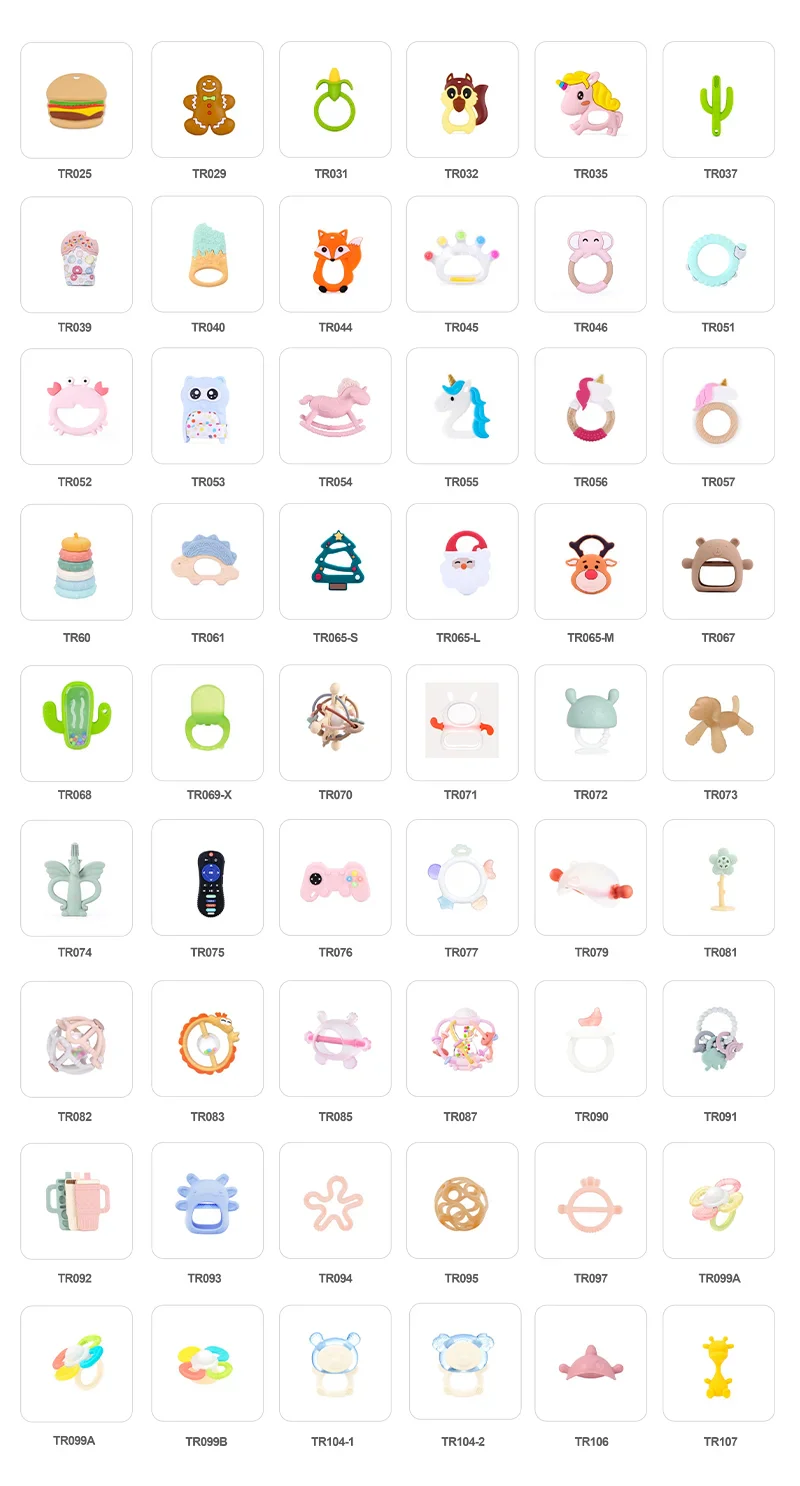
Animal-Shaped Hollow Silicone Teethers
These are light weight and easy to grip. Babies can feel different curves and textures and these also have a smooth surface to chew.
Use cases: Animal shaped teethers which are not very bulky or heavy are ideal for early teething stages because they are usually light weight and soothing for irritated gums.
Solid Silicone Teething Rings
These are simple in design, long-lasting, and easy to clean due to a simple design.
Use Cases: These are good for day-to-day use and consistent relief from itch and irritation.
Hybrid Wood and Silicone Teethers
These teethers are a good combination of soft and hard texture because they have the softness of silicone and hard texture of wood. However the wooden parts should not have toxic coatings and the edges should be rounded.
Use Cases: These teethers are good for sensory development due to mixed texture and are ideal for babies with strong bites.
Food Shaped Silicone Teethers
With engaging shapes like fruits or treats, these teethers promote independent soothing.Use Cases: These are ideal for hand-to-mouth coordination.
Typical Prices:
Pure silicone: $6–$15
Mixed materials: $8–$20
Premium brands: $15–$30
Purchasing Guide
The best teether would be the one that is in compliance with the standards, is safe to use for the baby, and ideal for baby’s age. Let’s see how you can achieve these goals.
Certification Requirements for Different Teether Materials
No matter what they are made of, all approved baby products must comply with the important, accepted global standards:
FDA food-contact compliance (U.S.)
LFGB testing (Germany) — stricter for silicone
EN71 (Europe) — tests mechanical strength, chemical safety
CPSIA (U.S.) — limits lead and phthalates
ISO 8124 — general toy safety
Material-specific reminders:
Silicone: Ensure “food grade” and platinum-cured silicone, not industrial silicone.
Natural Rubber: Should be labeled “latex-free” if intended for babies with allergies.
TPE: Must be free of PVC, BPA, and phthalates.
Selecting Material by Teething Stage
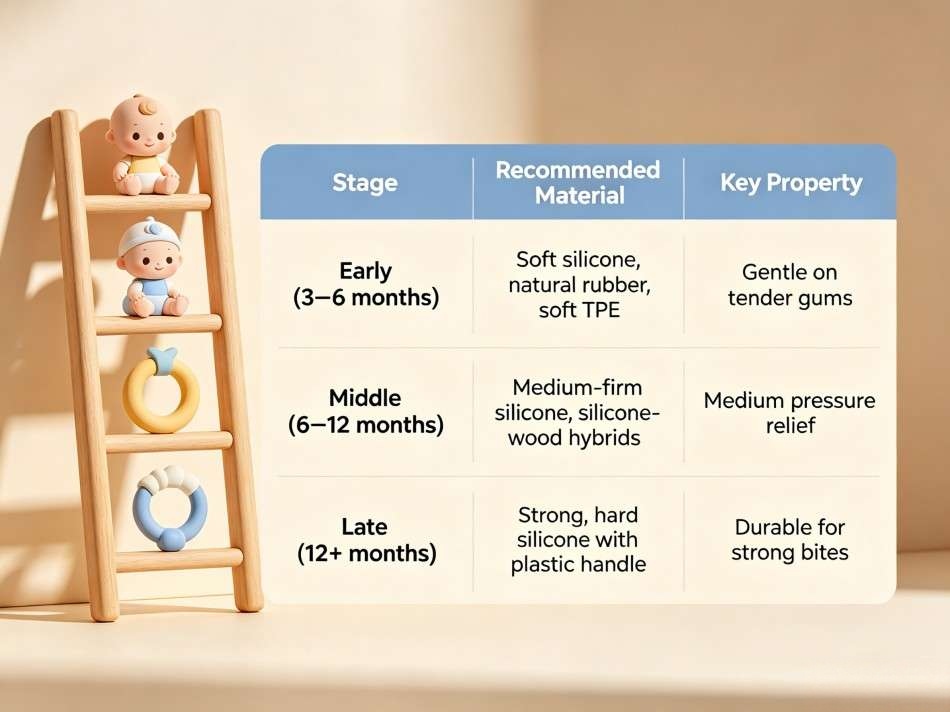
Different developmental phases call for different material properties. What’s suitable at one stage may be a bit too hard at the other stage. Here is a guide on how to ensure age-appropriateness while shopping for a suitable teether.
Early Stage (3–6 months):
Recommended Materials: At this stage, go for softer materials like silicone, natural rubber, or soft TPE.
Middle Stage (6–12 months):
Recommended Materials: Medium-firm silicone or silicone-wood hybrids can be a good choice at this phase for providing medium level pressure for the itchy gums.
Late Stage (12+ months and beyond):
Recommended Materials: strong and hard silicone, commonly with a plastic handle can be a good option.
Thorough inspection before purchase
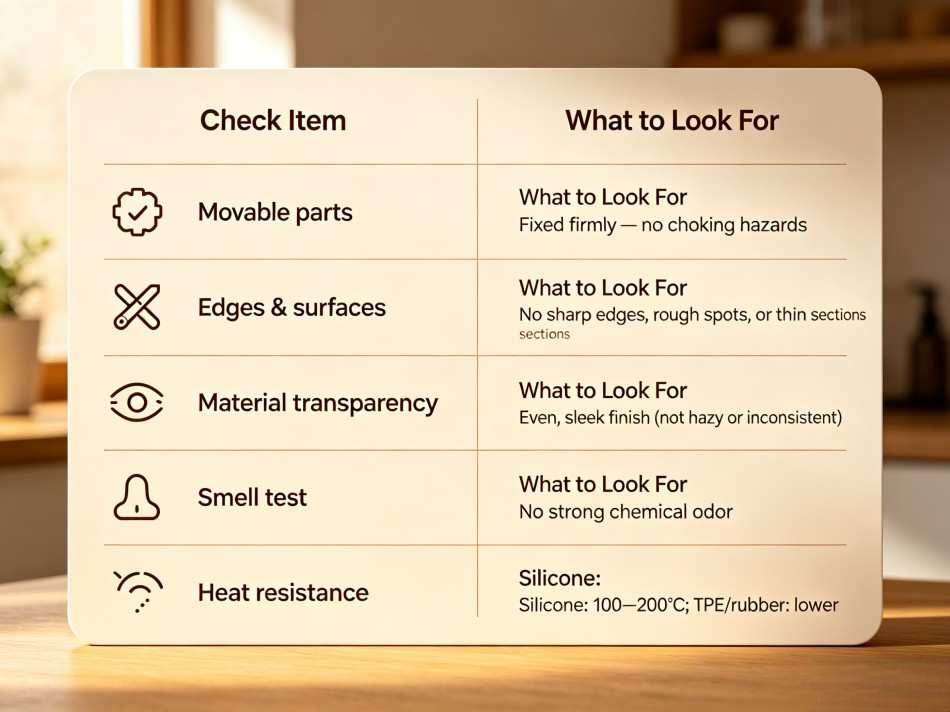
Before purchasing a teether for your babies, you should have a checklist in mind to make sure you get your hands on the most appropriate product. Here’s what to look for:
Movable Parts:
Must be fixed firmly in place to prevent small pieces from getting loose or these pieces can lead to choking hazards.
Edges & Surfaces:
Sharp edges, rough spots, or weak, thin sections that could rip need to be avoided.
Material Transparency:
Plastic of poorer quality might look hazy or inconsistent. In contrast, food-safe silicone usually has an even and sleek finish.
Smell Test:
A potent smell of chemicals can be a sign of substandard material or added chemicals that can be really harmful for baby’s health.
Heat Resistance:
Silicone of good quality can handle temperatures of 100–200°C. TPE and natural rubber are less capable of enduring heat, making them diffecult to sterilize and hence hygiene is compromised.
Average Price Comparison for Different Materials
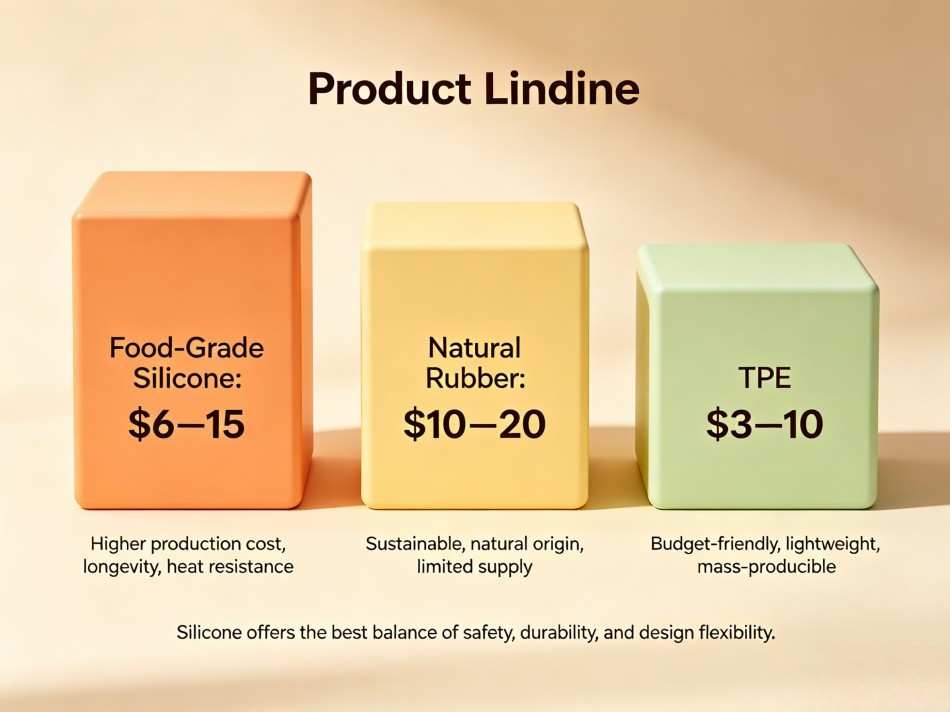
Although, the prices differ according to brands, and the quality of materials used, here is a general overview.
Material | Typical Market Price | Reason |
Food-Grade Silicone | $6–$15 | Higher production cost, but it ensures longevity and is resistent to high temperatures |
Natural Rubber | $10–$20 | Sustainable and completely natural in origin, but limited supply |
TPE | $3–$10 | Budget-friendly, lightweight, mass-producible |
Compared with TPE or other low-cost plastics, silicone stands out as the most well-rounded choice, offering superior safety , durability, and design flexibility, which is why it becomes an attractive choice among consumers.
Common Misconceptions About Silicone Baby Teethers
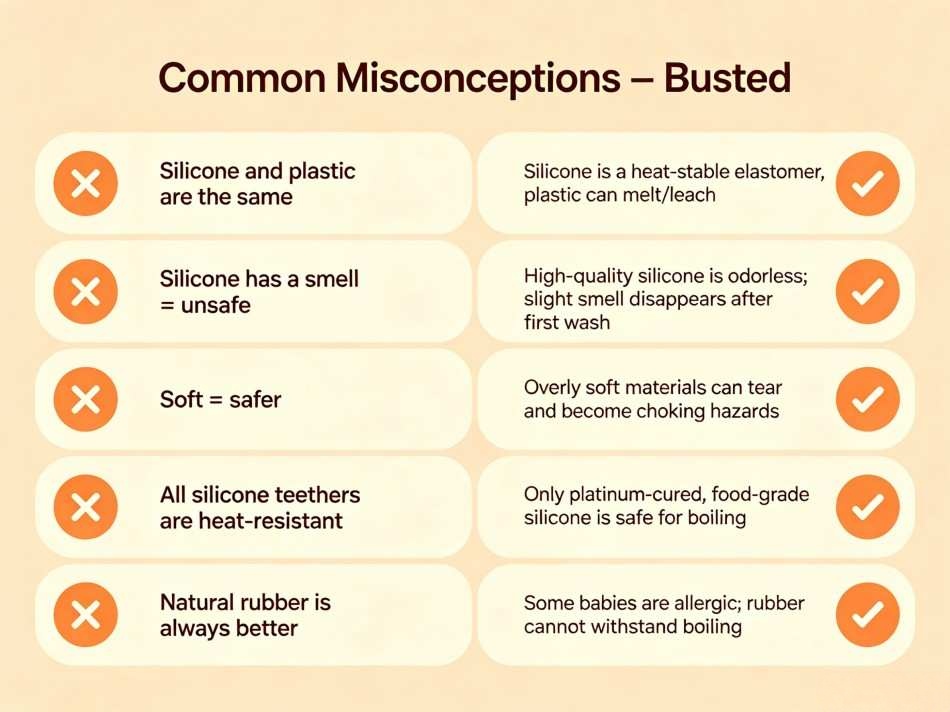
“Silicone and plastic are the same.”
False. Silicone is a cross-linked elastomer, heat-resistant and chemically stable. Plastic (PVC, PP, ABS) varies widely and may soften or melt at high temperatures. Moreover, the former is safer as it is BPA-free.
“Silicone has a smell, so it's unsafe.”
High-quality silicone is odorless. Having said that, a slight smell upon unpacking is normal and disappears after first wash
“Soft = safer.”
Not always. Overly softer materials are not only short-lived but tearing can also cause choking incidents.
“All silicone teethers are heat-resistant.”
Industrial silicone is not safe for high temperatures. Only platinum-cured, food-grade silicone is safer for boiling or steaming.
“Natural rubber is always better.”
Natural rubber is preferred due to its softness, but in some circumstances babies get allergic to latex. Moreover, rubber cannot tolerate higher temperatures and tends to age and deform more quickly than silicone. You can not sterilize it in boiling water unlike silicone.
Final thoughts
While choosing a teether, parents should focus on safety and practicality. For most families, food-grade silicone is a go to choice as it is durable, easy to clean, and offers wide range of designs.
For very young infants in need of soft texture, natural rubber serves as a gentle alternative but it isn’t resistant to boiling temperature.
Budget friendly choices may include TPE products, but they aren’t always BPA free. Conclusively, after getting information about the characteristics, required certifications, and actual performance of these different materials, it becomes easier for the parents to go for the best choice that suits their baby.